When it comes to documentaries on cult/exploitation film directors — of the sort now regularly made available as DVD/Blu-ray extras — Steve Mitchell’s feature-length portrait King Cohen is typical of a particular contemporary mindset. We are treated to dozens of ripe anecdotes about Larry Cohen’s methods as a filmmaker: the fast pace at which he worked, his talent for improvising instant solutions to tricky problems, the risks he took that sometimes potentially endangered cast and crew. He was prolific, adaptable to any genre, never short of a new, crazy script idea. A hard worker. A maverick. A fast talker. Irascible. All in all, a great guy.

King Cohen: The Wild World of Filmmaker Larry Cohen (Steve Mitchell, 2017)
But all throughout King Cohen, I kept wondering: why would — why should — we want to actually watch any of Cohen’s films? The documentary gives us no genuine reasons to seek out, explore and value the work itself; a barrage of split-second, nutty-looking clips from Q, The Stuff, God Told Me To and Full Moon High suffices. As so often happens with B movie makers, the legend far outgrows the films that gave rise to it; the outrageous anecdotes supplant any proper, patient work of critical analysis, let alone aesthetic evaluation. We’ve seen the same thing happen with Jesús Franco, Jean Rollin, Walerian Borowczyk, Andrzej Żuławski and a dozen other figures beloved of today’s cult crowd.
The myth of the person — visionary, inspired, driven, insane — looms far larger than the putative worth of any specific film, or even all their films taken together. As the artist Gianfranco Baruchello once wisely observed (in relation to Marcel Duchamp): ‘To say that the importance of a man is the myth of which he’s the center is to make him run the risk of being either everything or nothing.’ At this level of sub-critical discourse, Cohen becomes just a scuzzy, streetwise version of Andy Warhol: no journalist needs to have really seen Empire in order to crack some joke for or against the very idea of it. And no self-proclaimed cultist needs to have really seen or studied Bone or The Ambulance before sounding off about Larry Cohen in relation to ‘genre subversion’, social satire, clever filmmaking shortcuts, funny incidents on the set or in the street, or any of the rest of the empty bromides that today fill DVD audio commentary slots.
Even worse, this glad-handing, let’s-all-have-a-good-time approach to Cohen’s films is ultimately patronising and conservative. Behind the commentators’ evident smirk is the certainty that his work is not really that good — good cinema remains implicitly sanctified, confirmed in its place on a high cultural pedestal located elsewhere, in fact anywhere but here. Cohen’s cinema (so we frequently hear and read) is excessive, risible, camp, zany, madcap — and all such terms imply, at bottom, an acceptance of the most conventional terms of goodness and badness in art. If the films are sometimes hailed as interesting or intelligent, that is purely a matter of passing detail, of private jokes on the director’s part, or of a dreaded ‘subtext’ (the favorite dopey word of cultists) that intermittently surfaces. Again, the question insists: why would you want to watch them in any state other than being stoned and distracted, for the sake of a superior laugh?
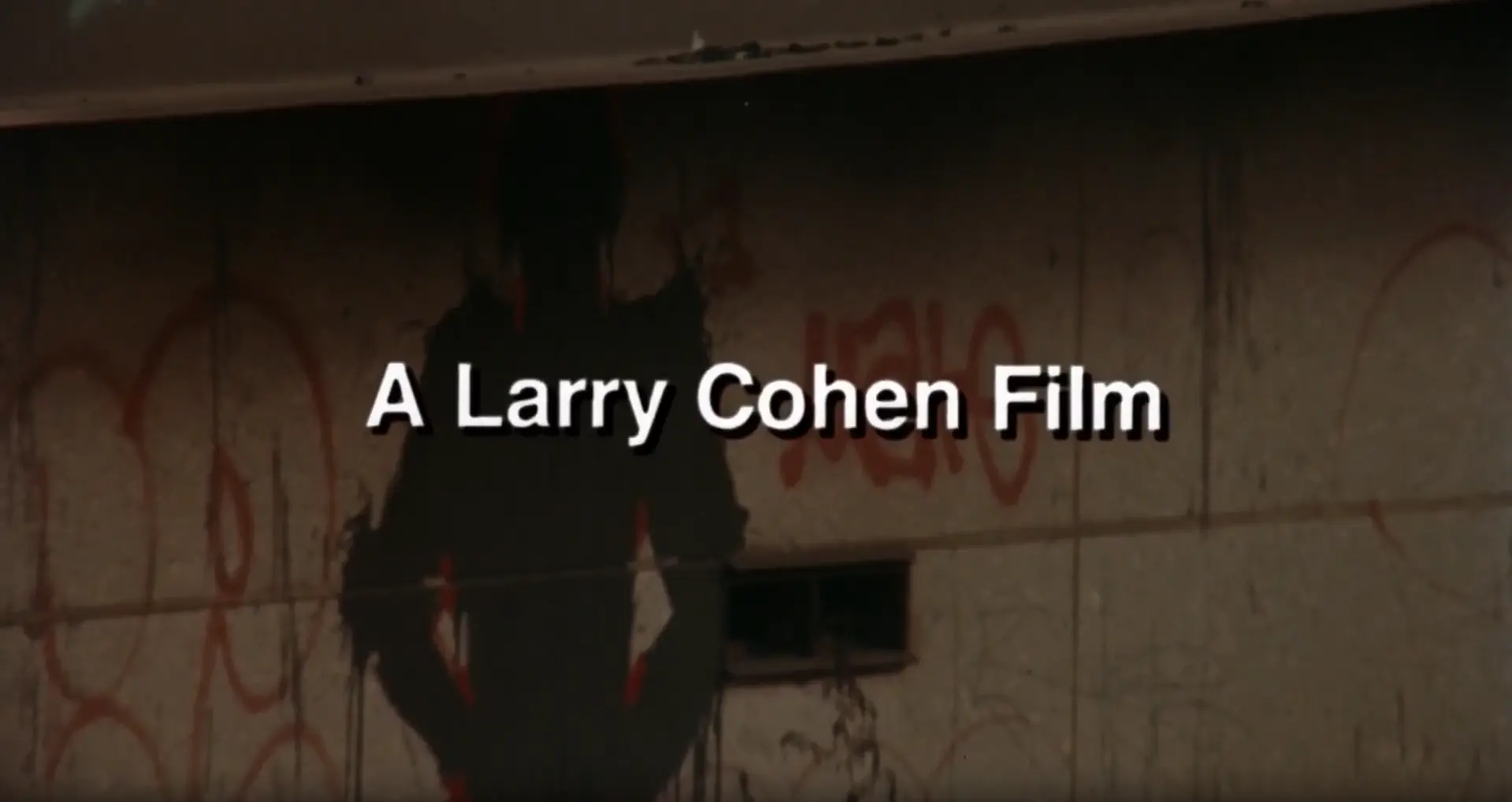
Perfect Strangers (Larry Cohen, 1984)
Perfect Strangers attracts, even from its most earnest admirers, a predictable, pat series of responses. I am speaking now of the class of statements that, at least, rise beyond the standard squeal of ‘it’s such a 1980s movie!’ (fashions, hairstyles, synth music) or the incorrect assumption that it’s some jokey ‘pastiche’ of the thriller genre. Statements like: It captures, in a ‘raw’ fashion, the sights and sounds of the streets of New York (inadvertent documentary appeal). It beat, by three months, Peter Weir’s Witness to a central plot premise (B movies grasp the Zeitgeist and get out there faster than A movies). It’s a thriller in an approximately ‘Hitchcockian’ mode, complete with POV shots and inserts of birds (rampant genre intertextuality). It partakes of an early 1980s ‘indie’ scene that includes films such as Liquid Sky and Smithereens (both 1982), and borrows Ann Magnuson from that milieu (strange synergies of the film industry). And it has random, quotable lines of dialogue about sexual politics, ‘second wave’ feminism, and the ‘gender wars’ of the time (Cohen pillaging contemporaneous newspaper headlines and magazine op-ed tags).
These are all methods that skim mild points of interest off the most evident, surface layers of the film, and almost always in a fragmentary, piecemeal fashion. (Intertextuality, like making-of gossip, is frequently an expedient way to circle a movie without saying or staking anything directly about its quality.) All up, it’s not yet enough to convince anybody that this is a good film.
But is it cinema? This is the question we need to ask and pursue, closely, in relation to every Larry Cohen film. I believe Perfect Strangers to be one of his very best works — not for its incidentals, but for its cinematic core. Let’s begin with its script structure. Not many of Cohen’s commentators discuss the structure of his stories — it’s as if it doesn’t quite occur to them to look for one amidst all the supposedly loose-limbed ‘craziness’. Story structure is quite evidently, however, a central obsession of Cohen’s (and a prime reason for his level of sustained success in the movie industry).
The narrative of Perfect Strangers unfolds, at first, the ambiguous interplay between three central characters, Johnny (Brad Rijn), Sally (Anne Carlisle), and Sally’s young child, Matthew (Matthew Stockley). Cohen, as always, follows the method of plotting interpersonal intrigue that is also used variously by Claire Denis and her co-writers, or by John Sayles: connect the characters via diverse, sometimes multiple and/or conflicting, lines or ties. Cohen’s characters are (in standard script-manual lingo) rarely ‘goal-driven’ and, even when they are, they are easily distracted from their consciously-envisaged targets; human will is a murky, confused, compromised arena for Cohen’s figures.
Here’s how the plot-and-character geometry goes. Johnny needs to get into Sally’s life in order to close in on Matthew, who has seen him murdering a drug dealer in a ‘blind alley’ (the film’s alternative title). Sally is attracted to Johnny (despite the feminist proselytising of her militant feminist pals), but occasionally wonders what is really going on inside him. In this configuration, Perfect Strangers already (even in its title) anticipates the largely 1990s genre of the intimacy thriller that I have outlined in a chapter of my book Mysteries of Cinema (2020). But Cohen cannily complicates the template, because Johnny is not only an opportunistic stalker following orders to kill. He is swayed not only by the mutual attraction between Sally and himself, but also by his hesitation in ‘disposing’ of the only witness to his crime — his character, well caught in Rijn’s casting, is a volatile mixture of masculine sensitivity, shy reserve, frustrated exhibitionism (determined to literally ‘leave his mark’ on New York with his blackened graffiti silhouettes), and sociopathic anger.
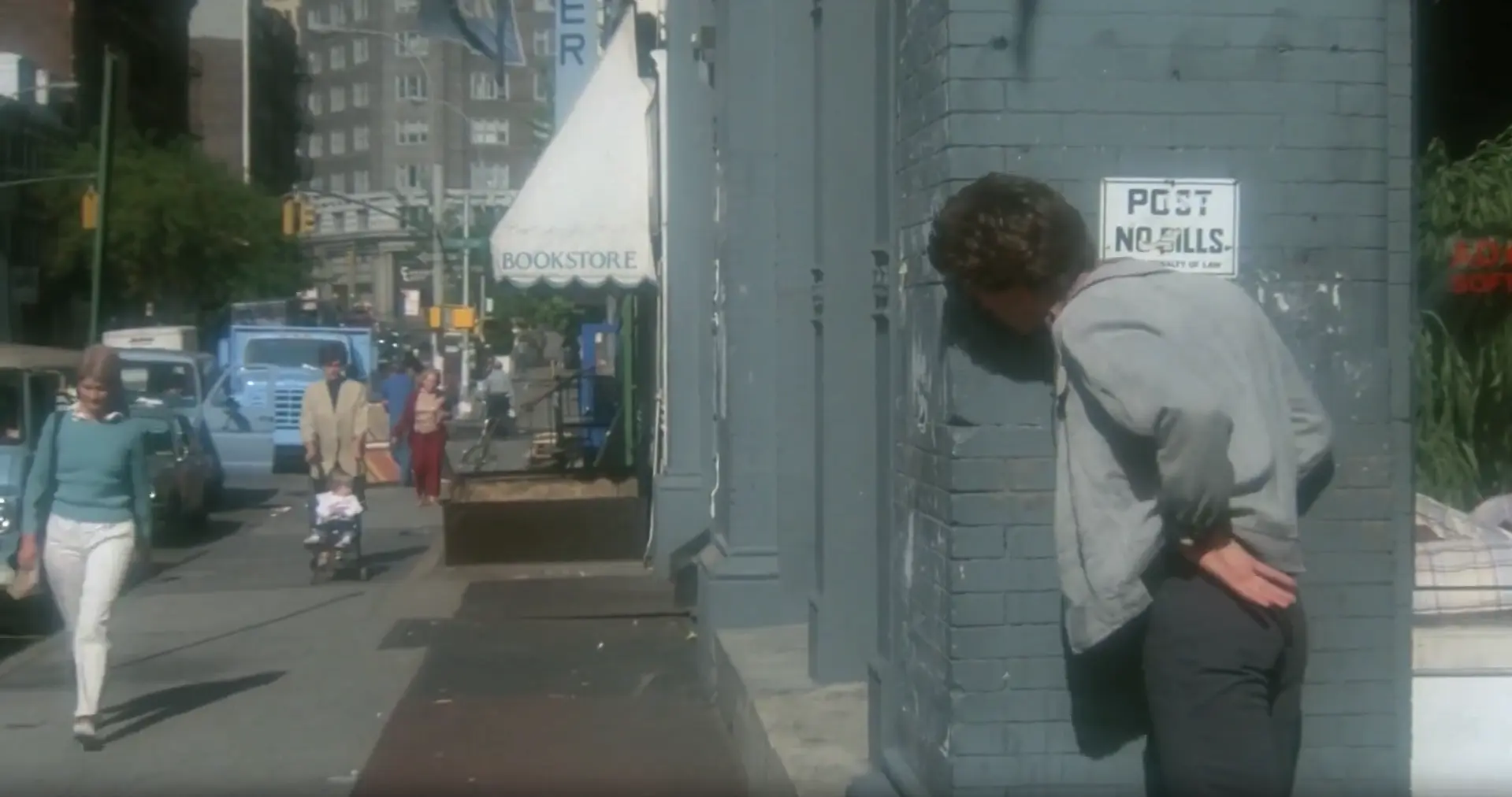
Matthew, for his part, is the most striking (if compact) bundle of enigmatic subjectivity: he’s not yet able to talk much, and those around him also speculate on how much he is even able, as a little kid, to remember. This adds a special level of tension to the plot’s temporality, since we are, at every moment, wondering whether Matthew may suddenly transform into a speaking and recollecting being — or, at the very least, someone whose unconscious, somatic gestures and playful picking-out of a police photograph will give the game away. (An echo, here, of the ‘brief recovery from insanity’ idea that structures Samuel Fuller’s classic Shock Corridor — the Fuller–Cohen affinity deserves lengthy analysis.) And this running ambiguity is juiced by the explicit exhortation to repress which is announced to Matthew by Sally within the film’s first three minutes: ‘You didn’t see anything — and I didn’t see anything.’
At the 25-minute mark of this 91-minute story, Cohen pulls a swiftie: Matthew disappears in a street crowd (during a ‘Take Back the Night’ demonstration) and Sally desperately searches for him — only to find that the abductor is a hitherto unseen fourth player, her ex-husband Fred (John Woehrle). So, he gets woven into the now-expanded intersubjective fabric, as well. All the way through, Cohen — true to his preferred mosaic form — keeps up glimpses (in varied, colorful locations) of Johnny’s criminal milieu and Sally’s feminist social scene, as well as the police investigation with which Fred gets involved.
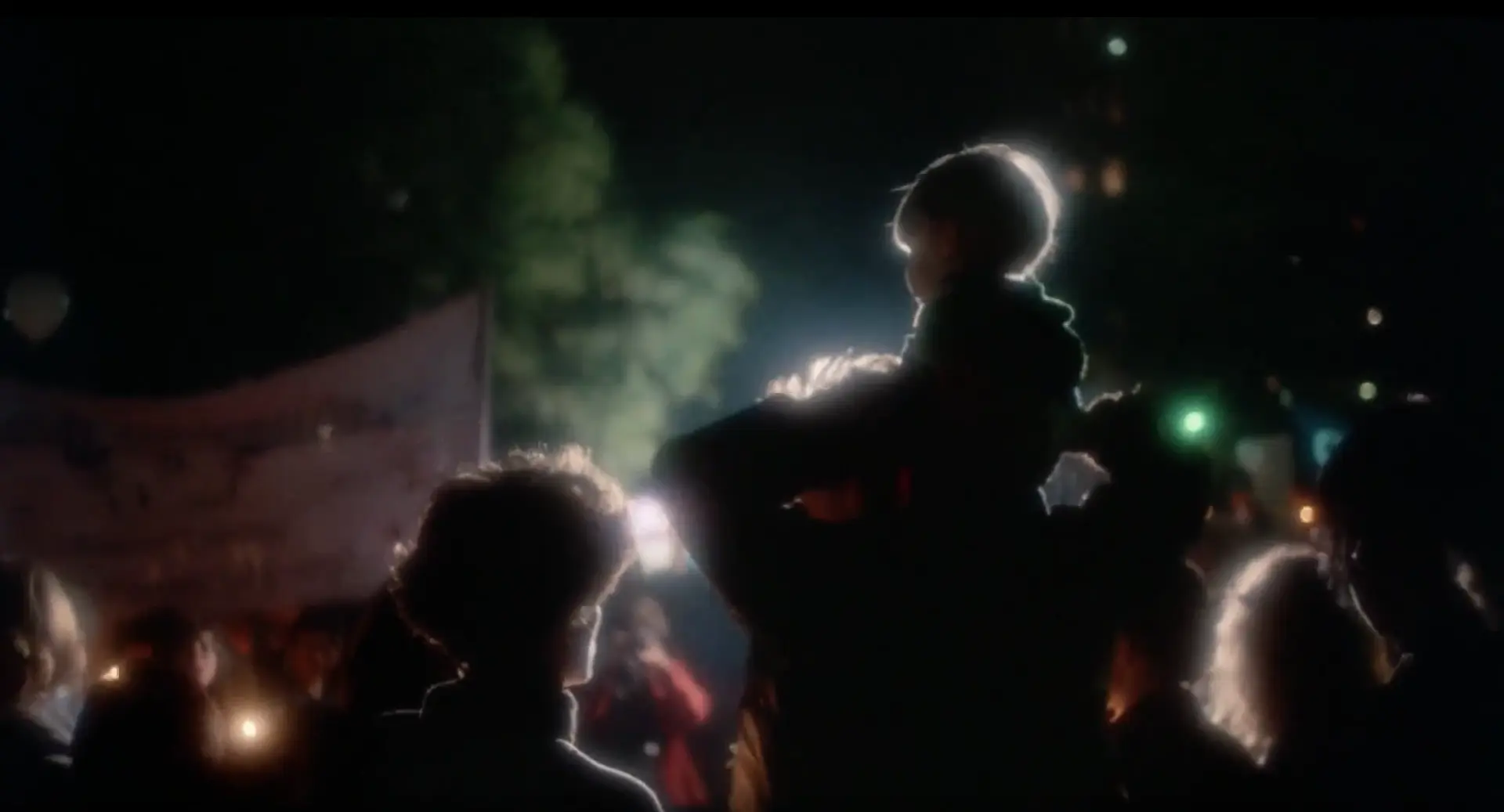
Tony Williams refers (in the course of an otherwise generally admiring section in his book on Cohen) to Perfect Strangers’s ‘crude cinematic techniques’. Yet what, exactly, is so crude about these techniques — and to which techniques is he alluding? Williams, in the tradition of his mentor Robin Wood, is too ready to unfussily dissolve or bypass formal matters in order to ascend to the higher-level abstractions of humanist theme and political allegory. (Wood’s own remarks on Cohen in the classic 1980s text Hollywood from Vietnam to Reagan are even more blatantly form-free.) Cinematographer Paul Glickman (a regular Cohen collaborator) keeps the camera fluidly moving in interior scenes. Charged exchanges of looks between characters in the central foursome are well shot and edited. The entire film glows, photogenically, in an unnerving way — as in Brian De Palma’s Obsession, brutal architectural monuments and cold human acts are played off, in the same frame, against seductive urban vistas.
But does the film contain truly cinematic ideas? By this, I mean ideas of drama that are embodied within (not merely illustrated or nodded to by) the mise en scène understood in a holistic sense: staging concepts, physical actions and movements, choreography (in relation to the camera’s découpage) of all the given elements. Perfect Strangers is impressive on this level. From the shop of Malda (Magnuson) full of clothes, dolls and masks, to the constricted, concrete playgrounds (hemmed in at all sides by tall buildings: a J.G. Ballardian vision!) in which Johnny both beats up Fred and endeavors to push Matthew too high up on a swing, the environments of the story take on far more than a ‘Larry was there’ documentary value; they become expressive.
Eventually, the film builds to its finest coup in this regard: Matthew spinning around helplessly in the fairground-style hurdy-gurdy carousel mounted on the back of a truck that Johnny grabs and drives away, en route to his finally assumed rendezvous as a child murderer. The abandoned city ruins that provide the locations for the final face-off — ‘closure’ is always freighted with moral and emotional ambiguity in Cohen — loop proceedings back to Johnny’s graffiti, another type of ‘mute testimony’ to echo the voiceless gestures of the child.
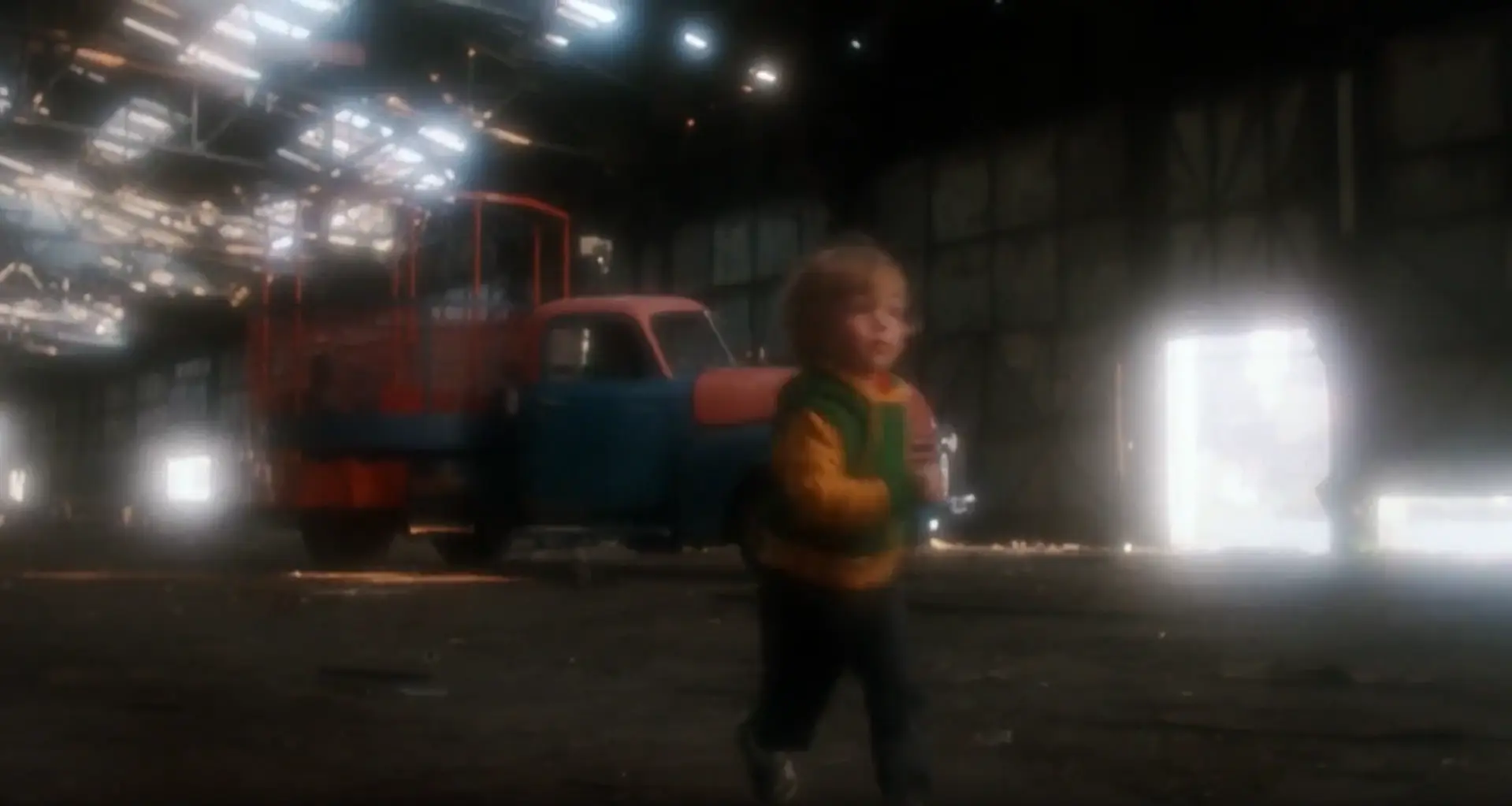
One could say that, in this brief text, I have endeavored to rate Larry Cohen as a (more or less) classical filmmaker: to grasp the mobile unity, in Perfect Strangers, of story, idea and style. A very similar analysis could be convincingly performed on It Lives Again and other key titles from his oeuvre. I believe it is a good place to start with any filmmaker who has been too quickly and lazily corralled into the not-always-useful category of a ‘cinema of excess’. But this consideration opens another question, on a new level: what about all the looser, crazier stuff that is undoubtedly there in films including Special Effects? How are we to describe it, value it, in terms that don’t just collapse his work down to a charmingly ramshackle, hit-and-miss nuttiness? This is, in general terms, the challenge of B cinema — a challenge to the very canon of aesthetics, and to the terms that stubbornly underlie our considered opinions as well as our daily, casual taste-judgements. It’s a challenge that, so far, film criticism has too rarely faced, or even recognized.